
Most of us grew up with the same rotation of fruits and vegetables, but food cultures around the world have long traditions built around ingredients that rarely appear in Australian supermarkets. Here are thirteen of the most interesting, what they actually are, and how they're typically eaten.
1. Acai berries
Small, deep-purple palm fruits from the Amazon, traditionally eaten as a pulp in Brazil. The flavour is earthy and mildly chocolatey. Because the fresh fruit spoils quickly, acai reaches Australia freeze-dried or as an extract powder.
2. Goji berries
Bright red-orange berries (wolfberries) grown in China, usually sold dried. They have a sweet-tart, cranberry-like flavour and appear in teas, soups and trail mixes.
3. Noni fruit
A knobbly Pacific-island fruit with a famously pungent smell, traditionally consumed as a fermented juice. Very much an acquired taste.
4. Camu camu
A small, sour Amazonian riverside berry that is naturally very high in vitamin C. Too tart to eat fresh in quantity, it's usually sold as a powder for smoothies and drinks.
5. Maca root
A hardy root vegetable cultivated high in the Peruvian Andes since Incan times, dried and ground into a nutty, malty powder. Our Organic Peruvian Black Maca is the dark-coloured variety, which naturally contains higher levels of polyphenols than white or red maca.
6. Lucuma
A Peruvian fruit with dry, yellow-orange flesh and a maple-caramel flavour, popular as a natural sweetening powder in desserts and smoothies.
7. Baobab fruit
The fruit of Africa's iconic baobab tree dries naturally inside its shell into a tangy, citrusy powder used in drinks and porridges.
8. Ashwagandha
A shrub whose root has been used in Ayurvedic tradition for centuries. The powdered root has a strong, bitter, earthy taste and is classically prepared in warm milk.
9. Chaga mushrooms
A dense, blackened fungus that grows on birch trees across Siberia, Canada and northern Europe, traditionally simmered as a tea. Available as extract powder, raw chunks, capsules and tincture.
10. Astragalus root
A perennial legume whose sliced root is a familiar sight in traditional Chinese herbal preparation, usually simmered in broths and soups. We offer it as a liquid tincture.
11. Shilajit
A blackish-brown resin that seeps from high mountain rock in the Himalayas and neighbouring ranges, formed over long periods from plant matter and minerals. Traditionally dissolved in warm water or milk; see our purified resins, powder and tincture.
12. Cordyceps
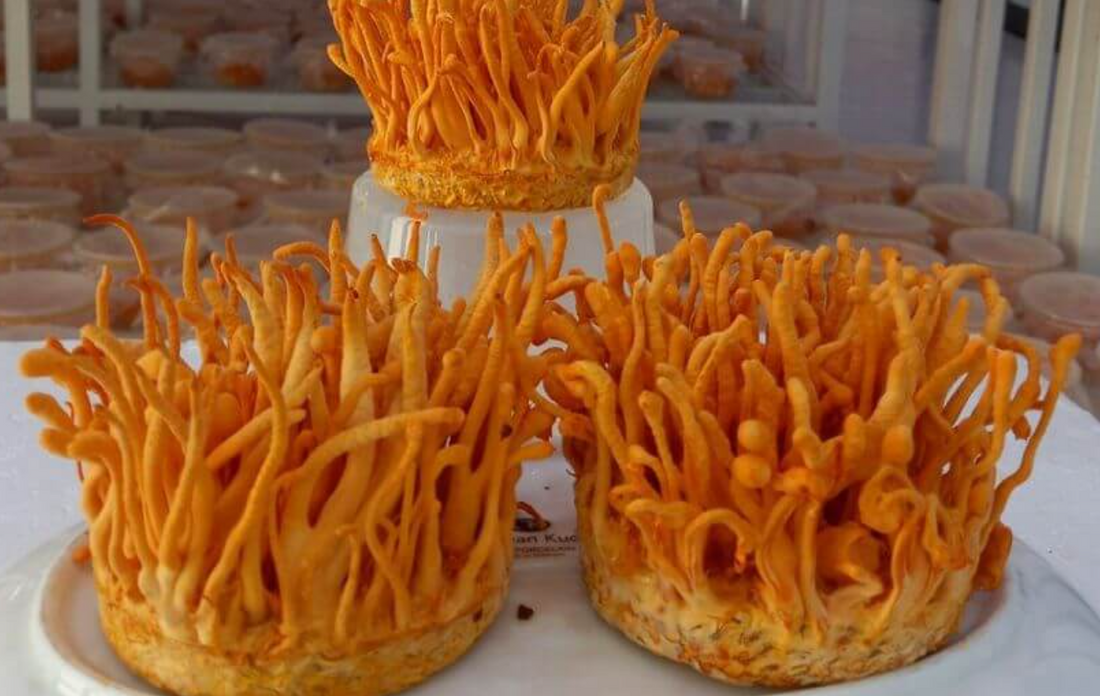
One of the strangest entries: a fungus from high-altitude regions of Tibet and Nepal with a long history in Chinese and Tibetan tradition. Cultivated cordyceps is now available as an extract powder with a savoury, earthy flavour.
13. Maqui berries
Deep-purple berries that grow wild in Chile, harvested by the Mapuche people for centuries as part of their traditional food culture. Tart and intensely coloured, usually sold freeze-dried.
Trying something new
Start small: most of these powders work in familiar formats like smoothies, porridge, hot drinks and baking. Check each product's serving suggestion and ingredient list, and choose suppliers who tell you the species, origin and processing method.
This article is general information only and is not medical advice. Our products are not intended to diagnose, treat, cure or prevent any disease. Always consult a qualified healthcare professional before starting a new supplement.