
Chaga is the common name for Inonotus obliquus, a fungus associated particularly with birch trees in cold northern regions. Its unusual appearance and long traditional history have produced plenty of dramatic claims online. A better way to understand Chaga is to start with what it is and how products are made.
What does Chaga look like?
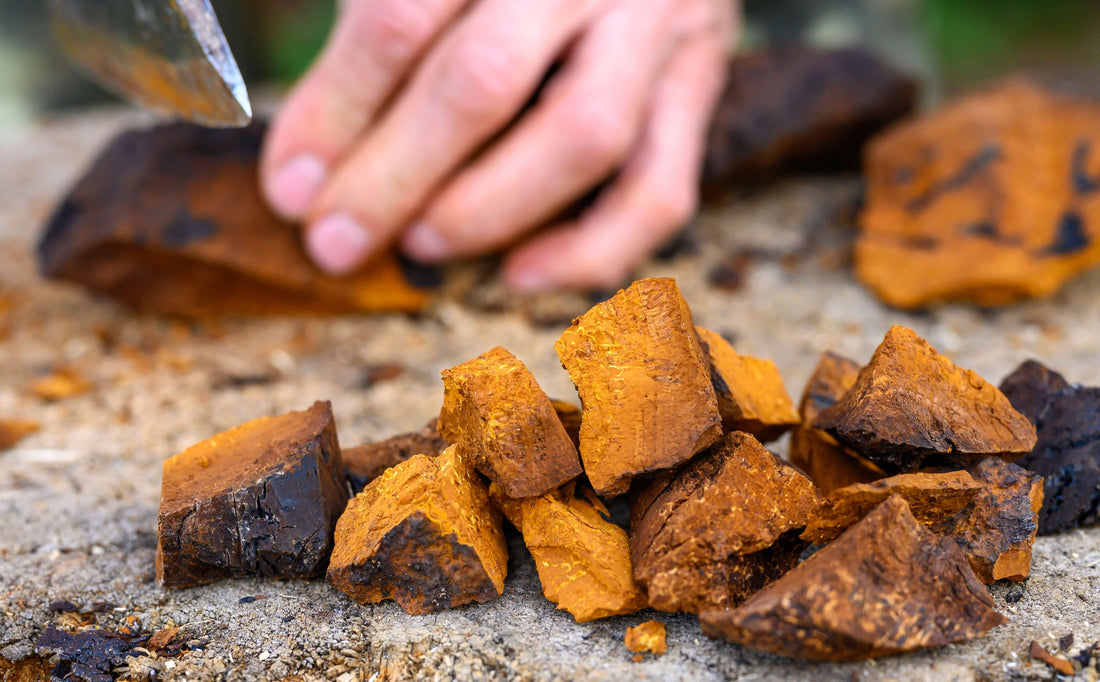
Wild Chaga forms a dark, irregular mass on the outside of a host tree. The exterior can look burnt or charcoal-like, while the interior is generally brown to orange-brown.
Where is it found?
Chaga is associated with colder regions across the Northern Hemisphere, including parts of Russia, Northern Europe, Canada and Asia.
Chunks, powder and extract
Dried chunks can be simmered in water. Ground Chaga is a more convenient form of the same starting material. Extract powders undergo an additional extraction and concentration process.
What should you look for?
Check the species, origin, raw material, extraction method, extract ratio where relevant, ingredient list and independent laboratory testing.
Be cautious with extraordinary claims
Terms such as 'miracle mushroom' are not useful measures of quality. Objective details about identity, sourcing, processing and testing provide a better basis for comparing products.
This article is general information only and is not medical advice. Our products are not intended to diagnose, treat, cure or prevent any disease. Always consult a qualified healthcare professional before starting a new supplement.