
Few foods have travelled as far, as fast, as the acai berry — from a staple of Amazonian river communities to smoothie-bowl menus worldwide. Here's what the fruit actually is, how it's traditionally eaten, what's in it, and how to choose an acai product in Australia.
What is acai?
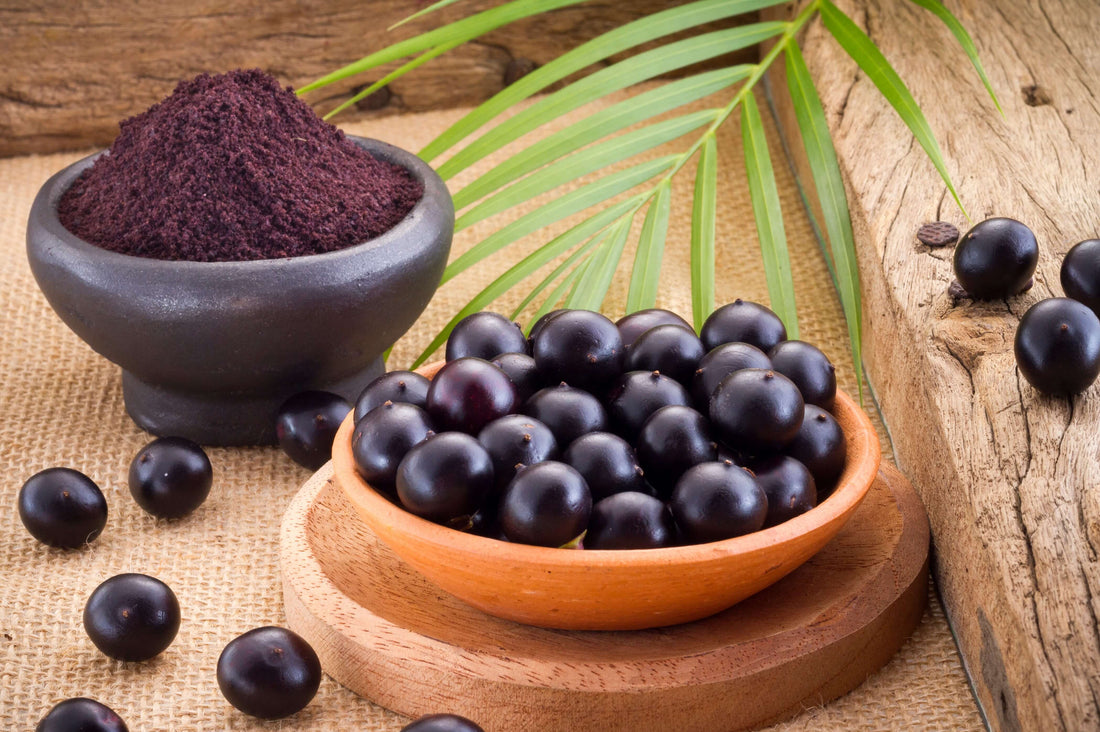
Acai (pronounced ah-sah-EE) is the small, deep-purple fruit of a palm tree that grows across the Amazon basin, particularly in Brazil. Each berry is mostly seed, with a thin layer of flesh. For communities along the Amazon, acai has long been an everyday food rather than a novelty — the pulp is traditionally eaten with fish, dried shrimp and manioc, not as a sweet dish.
What's in it
Acai's flesh naturally contains anthocyanins (the pigments behind its deep purple colour), polyphenols, fibre, and an unusual fatty acid profile for a fruit — it's relatively rich in oleic acid (omega-9) and linoleic acid (omega-6). Its flavour is earthy and mildly chocolatey rather than sweet.
Why you can't buy it fresh in Australia
Fresh acai oxidises and spoils within about a day of harvest, so it can't be exported as whole fruit. Everything sold in Australia is processed close to harvest — typically frozen pulp, freeze-dried powder or a concentrated extract.
Choosing a format
Frozen pulp is closest to how acai is eaten in Brazil and is the base of most acai bowls. Freeze-dried powder is shelf-stable and convenient for smoothies. Extract powder, like our organic acai powder, concentrates the water-soluble components of the fruit into a smaller serving. Check the label for the concentration ratio, whether the product is organic, and that there are no added sweeteners or fillers.
Ways to use it
Blend a teaspoon into smoothies with banana and berries, stir it through yoghurt or overnight oats, dust it over porridge, or build a classic acai bowl with frozen fruit and granola. Its dark-berry flavour pairs naturally with cacao and coconut.
This article is general information only and is not medical advice. Our products are not intended to diagnose, treat, cure or prevent any disease. Always consult a qualified healthcare professional before starting a new supplement.