
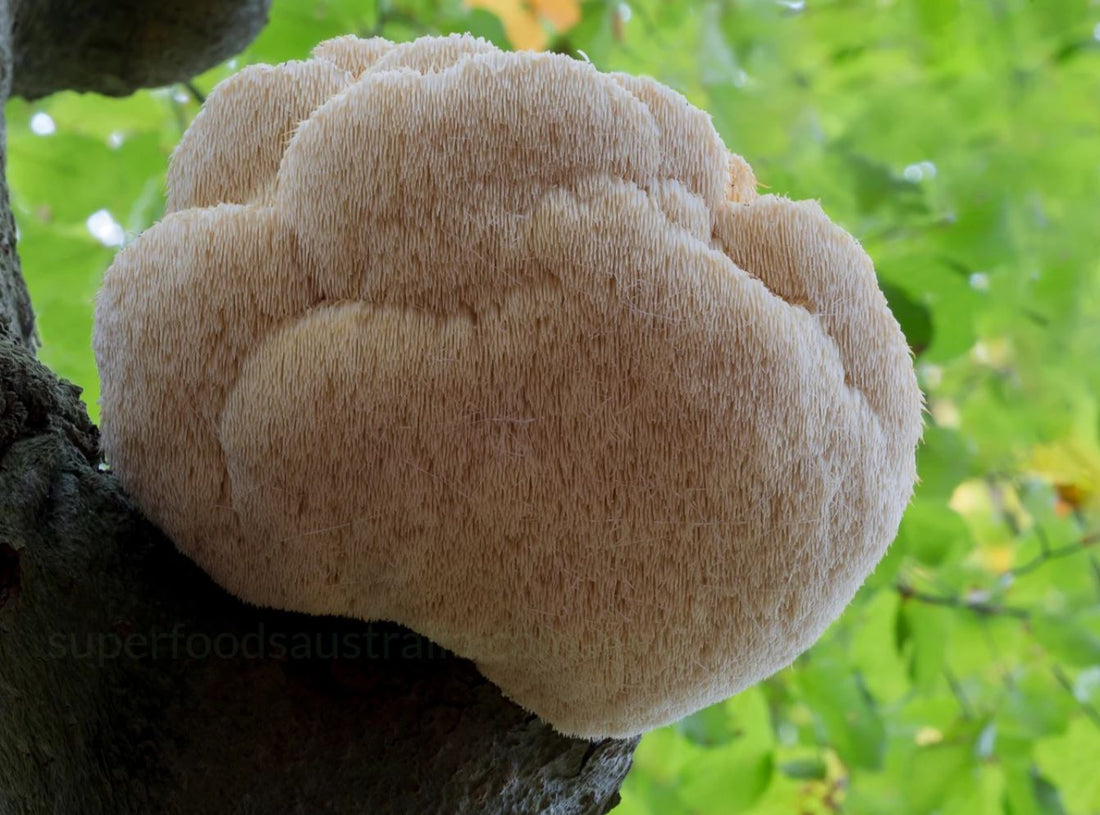
Lion's Mane mushroom (Hericium erinaceus) is one of the most distinctive edible mushrooms in the world. Its long white spines give it the appearance of a shaggy mane. In China it is commonly known as hou tou gu, while in Japan it is called yamabushitake.
Where does Lion's Mane come from?
Lion's Mane grows naturally on hardwood trees and fallen logs in temperate forests. Modern commercial cultivation usually takes place on hardwood-based substrates under controlled temperature and humidity.
Fruiting body, powder and extract
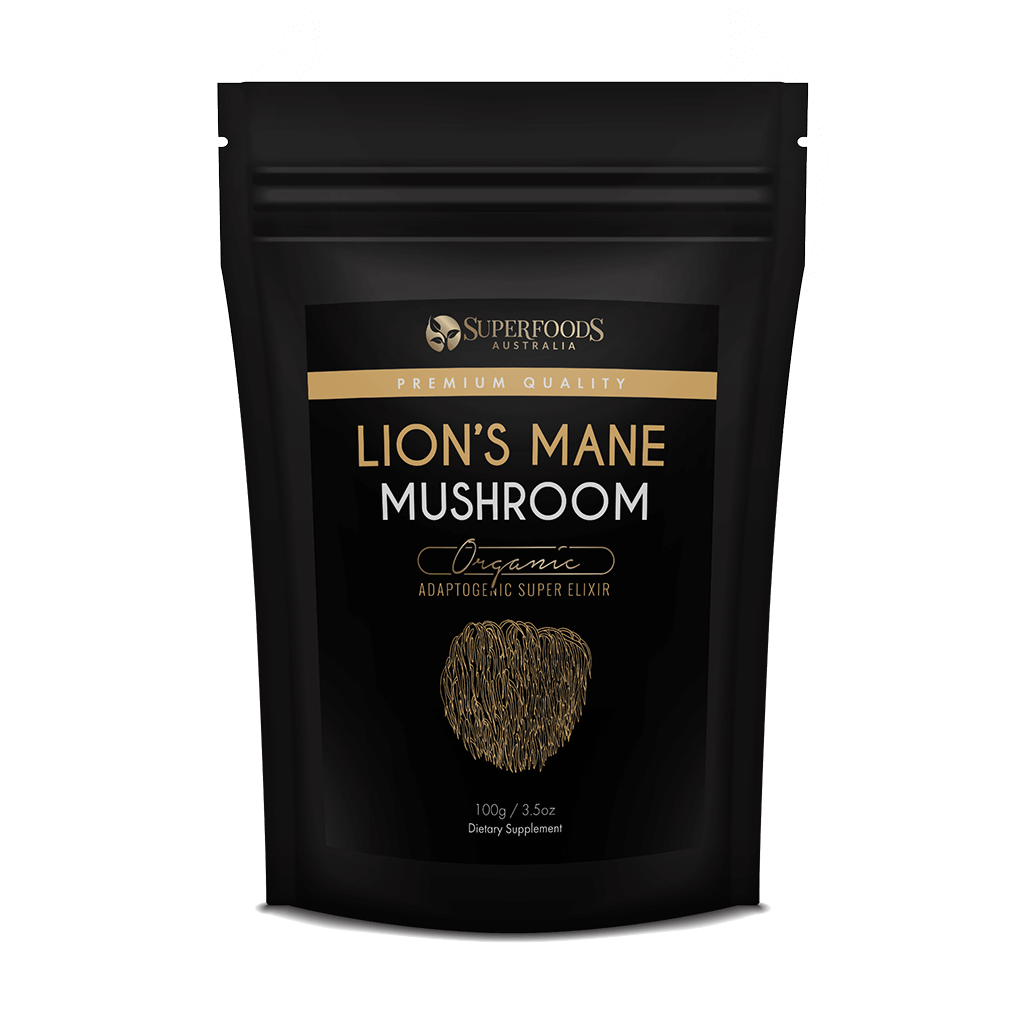
Whole or powdered fruiting body is the harvested mushroom after drying. Extract powders undergo an additional extraction process. When comparing products, useful factual details include species, fruiting body versus mycelium, extraction method, extract ratio where applicable, beta-glucan testing and country of origin.
Australian-grown Lion's Mane
Superfoods Australia also offers Australian-grown Lion's Mane produced in Victoria. Useful distinctions between products include origin, growing method, format and whether the product is a whole mushroom powder or an extract.
Simple ways to use it
Fresh Lion's Mane can be pan-fried with butter or olive oil. Powder can be added to hot chocolate, smoothies or savoury recipes. Extract powder can be stirred into coffee or another drink according to the preparation directions on the product.
What to look for
Look beyond dramatic marketing claims. Check the species, origin, fruiting-body or mycelium status, extraction information, independent testing and quantity supplied. These details make products much easier to compare objectively.