
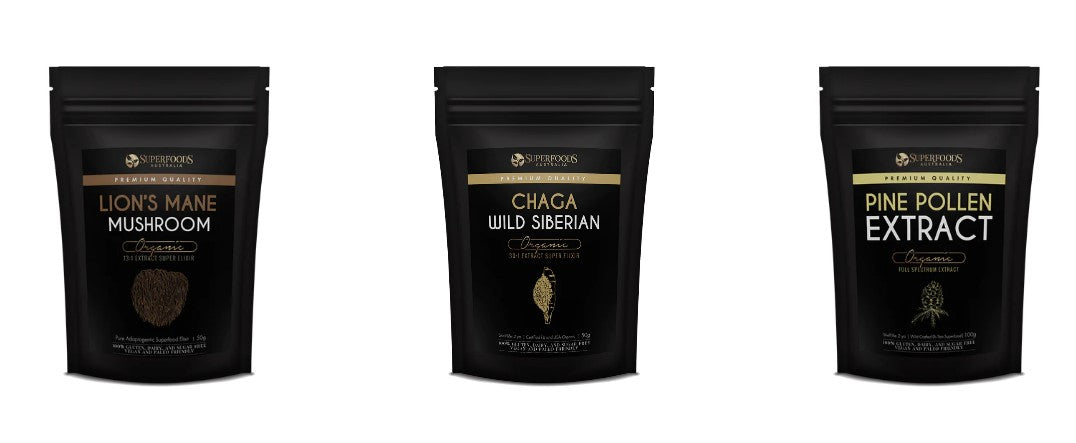
Some products in our range have been customer favourites for years. If you're new to Superfoods Australia, this guide explains what our most popular products actually are, where they come from and the formats they're available in, so you can decide what suits your kitchen and routine.
Lion's Mane Mushroom
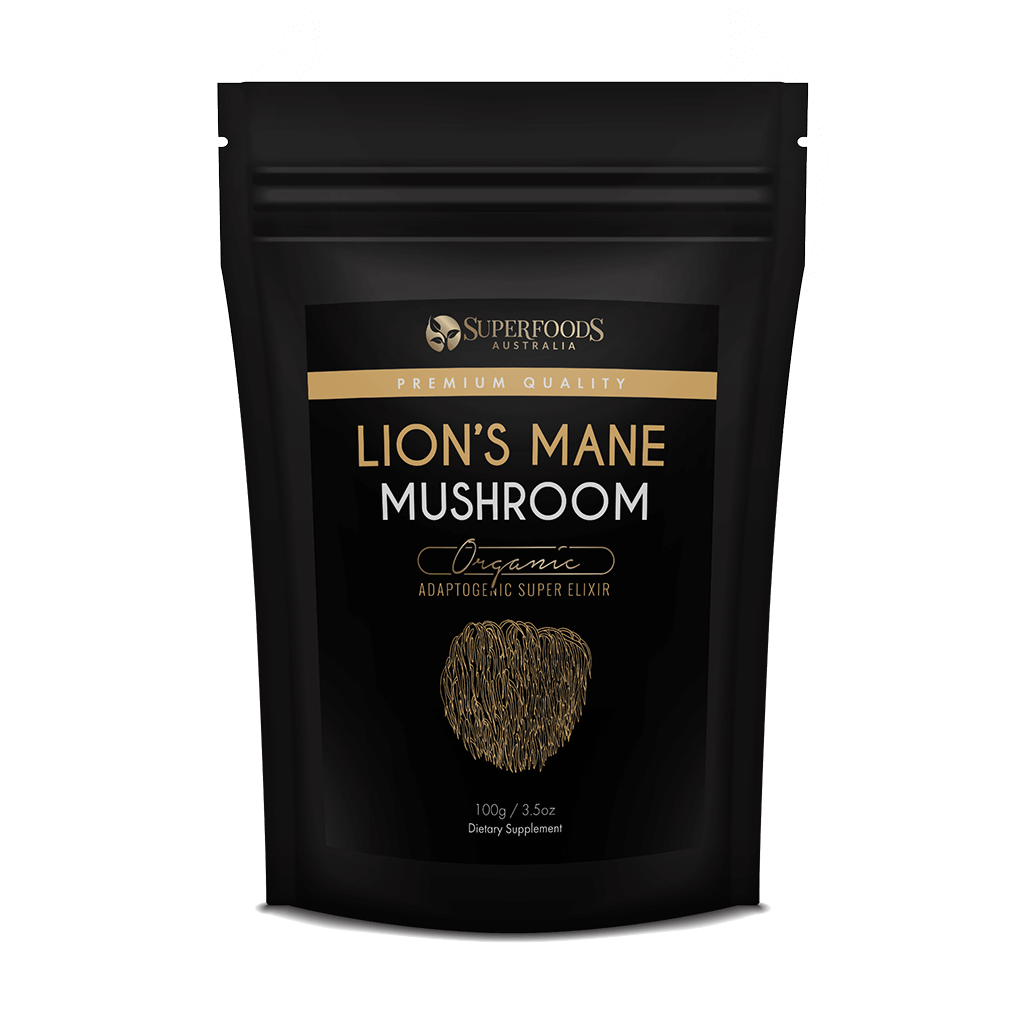
Lion's mane (Hericium erinaceus) is a shaggy white mushroom that grows on hardwood trees and has a long history in East Asian cooking. It has a mild, slightly seafood-like flavour when cooked fresh. We offer it as a concentrated extract powder, Australian-grown wholefood powder, capsules and a tincture. When comparing lion's mane products, look at whether they're made from fruiting body or mycelium, the extraction method and ratio, and the country of origin.
Chaga
Chaga (Inonotus obliquus) is a dense, dark fungus that grows on birch trees in cold northern climates such as Siberia. Its woody texture means it's traditionally simmered as a tea rather than eaten. Our range includes raw ground chaga for brewing, dual-extracted powder, freeze-dried extract, capsules and a tincture. Points of difference between chaga products include wild-harvested versus cultivated material, the extraction method and the drying process.
Shilajit
Shilajit is a tar-like resin collected from high mountain rock in ranges such as the Himalayas and Altai. It forms over long periods from compressed plant matter and minerals, and naturally contains fulvic acid and trace minerals. We offer purified resins from several regions, an extract powder and a tincture. Region, purification method and lab testing are the main things to compare.
Rosita Cod Liver Oil
Rosita Extra-Virgin Cod Liver Oil is produced in small batches from wild-caught Norwegian cod using a raw, heat-free process. It naturally contains omega-3 fatty acids and vitamins A and D. It's available as a liquid or in softgels; the liquid suits larger servings while softgels avoid the distinctive flavour.
Pine Pollen & Pine Needles
Our pine range includes wild-harvested Pinus massoniana pollen (as cracked cell wall powder, 20:1 extract and tincture) and Siberian pine needle tea, tincture and extract. Pine pollen is collected during a short annual window before the pollen is released; the species and processing method are the key details to check.
How to choose
Whatever you're considering, the same questions apply: what species or source is it, where was it harvested, how was it processed or extracted, and what testing information does the supplier provide? We publish sourcing and testing details on each product page so you can compare with confidence.
This article is general information only and is not medical advice. Our products are not intended to diagnose, treat, cure or prevent any disease. Always consult a qualified healthcare professional before starting a new supplement.